
Sheng Shu Editions

The Sheng Shu publishing house, with its series ‘Drops of Sky’, publishes works of the masters of the Dōng Shèng Méi tradition and texts from similar traditions, like the Dzogchen, which specifically deal with the theme of the ‘true nature’ of the mind.
The Dragon of the Clouds
— English version available —
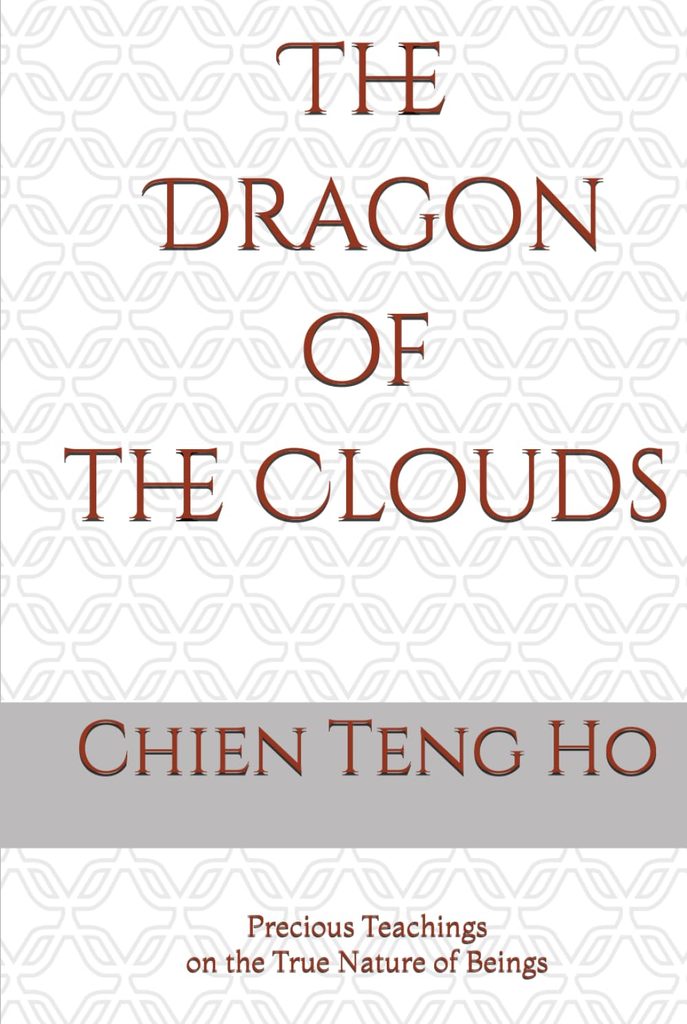
This work presents the purest essence of the teachings that lead individuals to awakening, according to the Chinese tradition of the Dōng Shèng Méi (Sacred Rose of the East). While each has its own distinctive features, we may say that the Dōng Shèng is to Taoism what Dzogchen is to Tibetan Buddhism and Advaita Vedanta to Hinduism. The book is a collection of teachings transmitted orally by Chien Teng Ho (the master currently entrusted with leading the Dōng Shèng Méi) to his students in Taiwan, during a series of meetings held between February 2018 and March 2022. It is divided into three parts, ‘Teachings’, ‘Pàn Mào’ (lit. ‘dissolving appearances’) and ‘Practice’, each corresponding to one of the Three Essential Principles (Body, Energy and Spirit) which, according to the tradition of the Dōng Shèng Méi, are the fundamental elements that make up human nature. An appendix contains a short text by Chien Teng Ho, ‘Liberation in Five Steps’, which is an integral part of the oral transmissions the master has given his students and an essential support for all sincere practitioners.
Buddhahood without Meditation

The volume contains the first Italian translation of Düdjom Lingpa’s work “Buddhahood without Meditation”, inestimable book of the Dzogchen tradition (Great Perfection), personally edited by Chien Teng Ho and enriched by his precious commentary. It is divided into two parts: the text and the commentary.
Düdjom Lingpa (1835-1904) was a famous master and tertön of Tibetan Buddhism, whose peculiarity was to receive spiritual teachings and meditation practices directly from disincarnate masters and bodhisattvas, during visionary encounters. Among the masters stand out the names of Guru Rinpoche (Padmasambhava) and his consort Yeshe Tsogyal; among the bodhisattvas deities of the calibre of Avalokiteshvara, Manjushri, and Vajrapani. The term ‘tertön’ (‘treasure discoverer’) refers to that type of masters who have the ability to rediscover termas (‘hidden treasures’) of which this work constitutes a particularly significant example and one of the major contributions to the knowledge of Nang Jang.
Nang Jang is a sort of training aimed at refining the perception of “reality”. In Dōng Shèng Méi, such capacity is trained within a rich and complex system of practices, which takes the name of Pàn Mào (literally dissolving appearances), aimed at transforming and dissolving the practitioner’s point of view. This objective is achieved by addressing the question of the point of view in every respect, by means of instruments related to the dimension of the Body, of the Energy, and of the Spirit. Once the sensorial, emotional, and conceptual appearances are dissolved, our true nature reveals itself, through its clear light (Liàng), like a blazing sun in a clear sky.